

Do fly sheets really work?
Whether they're worth it, whether your horse will cook in one, what those coat patches underneath mean, how one should fit, and which mesh to pick.
By The Schneiders Product Team · Updated August 12, 2026
Family owned in Chagrin Falls, Ohio since 1948. We design our own blankets, sheets, and fly gear, and we turn horses out in it.
Yes, for biting flies. A fly sheet is a physical barrier, so unlike spray it doesn't wear off, wash off, or need reapplying twice a day. It won't do much about face flies or gnats around the eyes, which is what a mask is for, and it can't stop what lands on bare legs.
The case for a fly sheet is simple: bugs can't bite through it. Where people get frustrated is the details -- heat, rubs, fit, and how long one survives a horse who plays rough. Here's what we get asked most.
Will my horse be too hot in a fly sheet?
The horses that struggle are usually the ones in a sheet that's too heavy for the climate, or one that's filthy. Mesh clogged with dust and sweat stops moving air.
Check him rather than guessing. Slide a hand under the sheet at the shoulder in the afternoon -- warm is fine, slick with sweat is not. On genuinely brutal days a cooling mesh weave is the one to reach for.
There are coat patches on my mare underneath the fly sheet. Normal wear, or a real problem?
Look at where the patch is, because it tells you what's wrong. At the point of the shoulder, the sheet is too tight through the chest or cut too straight. At the wither, it's sitting down on him, usually because it's too big and has slid back. Along the spine, it's too small and pulling.
Fixes in order of how well they work: a better-fitting cut, then a shoulder gusset or stretch panel, then a slippery liner or shoulder guard underneath. The liner treats the symptom, so try fit first.
One thing that isn't fit: a mare in season or a horse with sensitive skin can rub deliberately. If the hair loss comes with flaky, crusty, or sore skin rather than clean wear, that's worth a vet's opinion rather than a new sheet.
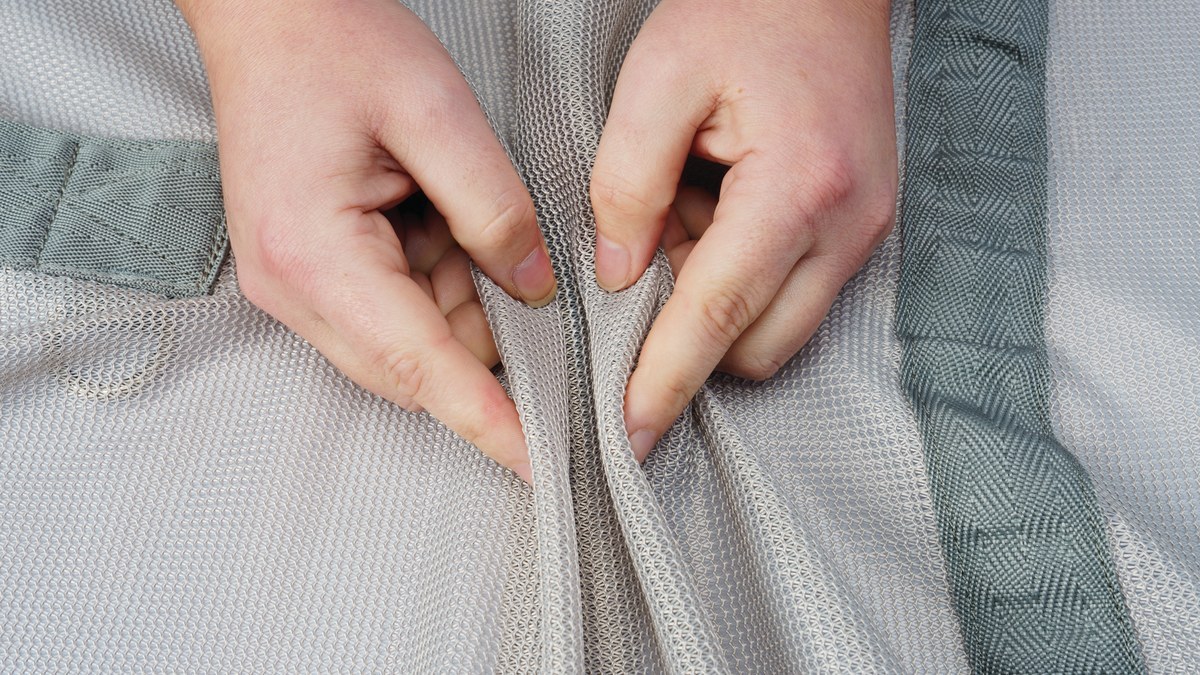
Which mesh should I choose?
If your problem is midges and no-see-ums rather than big horseflies, weave tightness matters more than anything else on the label.
If your problem is a horse who destroys everything, durability wins and you accept slightly less airflow.
Belly coverage is worth having either way. Bellyband styles close off the gap where the bugs that bother horses most tend to feed.


How should a fly sheet fit?
Watch him walk in it, not just stand. Fly sheets are worn for long stretches in turnout, so a sheet that binds slightly at the shoulder will rub given twelve hours to do it.
Sizing up to fix a shoulder rub usually backfires. A bigger sheet slides back and starts rubbing the wither instead -- a different cut is the real answer.
Can he wear it around the clock, and in the stall?
Daily removal is the single habit that prevents most fly sheet problems. Two minutes a day beats a bald shoulder in July.
Rinse or brush it regularly. A sheet caked in dust and sweat breathes worse, rubs more, and wears out faster.
Mine gets shredded. How do I make one last?
Most catastrophic tears start as a snag on a fence, a gate latch, or another horse's teeth. Walking the fenceline for protruding hardware is unglamorous and genuinely effective.
Repair tape handles small holes in the body of the fabric. Damage at the closures, surcingles, or leg straps is load-bearing and worth a proper repair.
Wash and store it properly at the end of the season. Salt left in mesh over winter weakens the fibers, which is why a sheet can come out of storage and tear in week one.


A sheet handles the body, not the face
Most horses need a sheet and a mask. Legs and the last few gaps are what spray is actually for.
Fly SheetsFly MasksFly Neck CoversFly Sprays & RepellentsNot sure which mesh or size suits your horse? Ask our team -- we make these, so we know how they fit.