
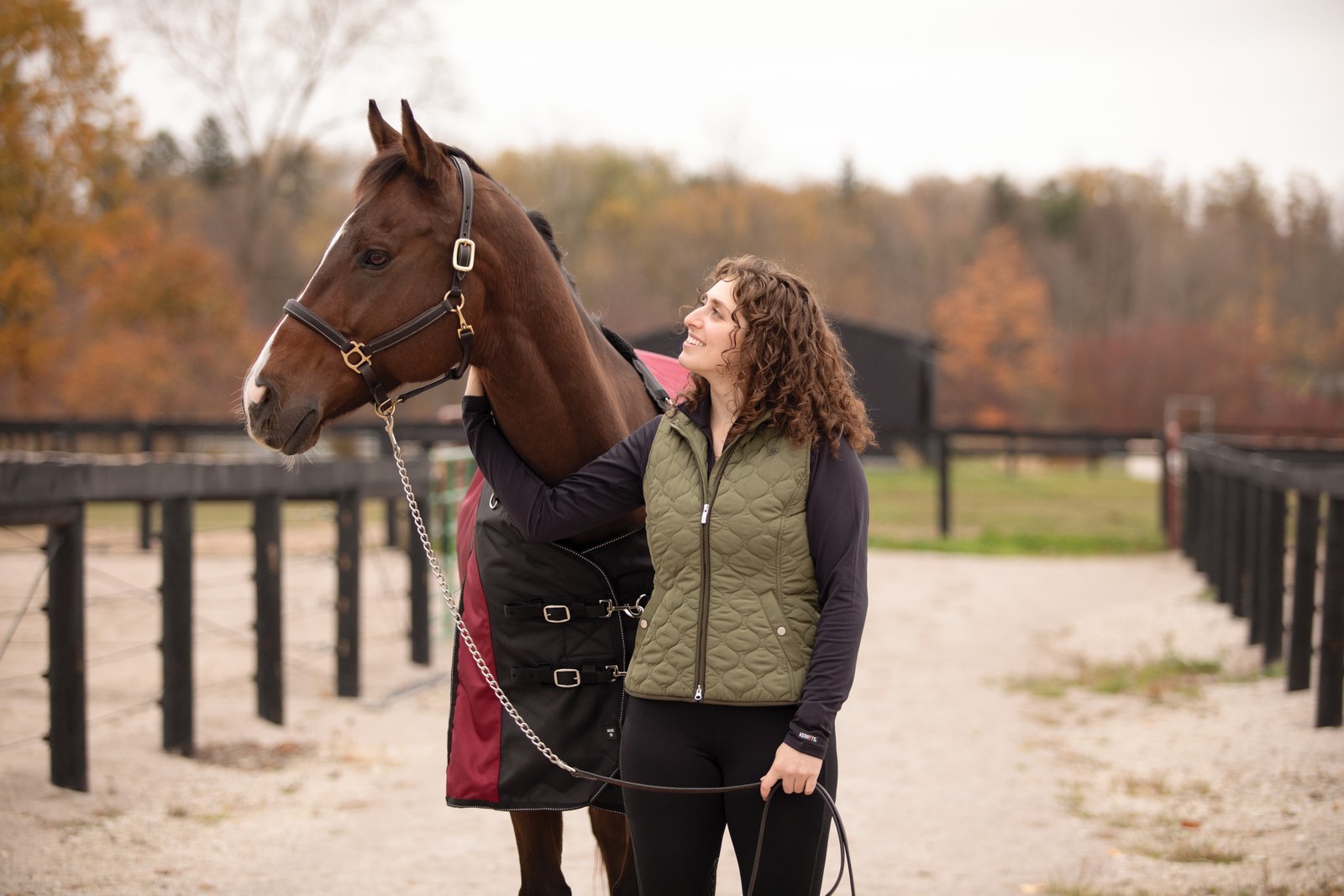
What blanket weight do I need at what temperature?
You asked for a range, not "it depends." Here's a working chart, what changes it, and what to do about mornings that start at 45°F and finish at 75°F.
By The Schneiders Product Team · Updated August 12, 2026
Family owned in Chagrin Falls, Ohio since 1948. We design our own blankets, sheets, and fly gear, and we turn horses out in it.
As a starting point for an unclipped horse in dry conditions: no blanket above 50°F, a sheet or lightweight 40°F to 50°F, a midweight 25°F to 40°F, and a heavyweight below 25°F. Clip the horse, add wind or rain, or take away shelter and every one of those numbers moves up a layer.
Every barn has a different rule and most of them are somebody's habit rather than anything about the horse. The honest version is that a chart gets you close, and then four things move it: whether the horse is clipped, whether he's wet, whether there's wind, and whether he can get out of the weather. Start here, then adjust.
| Temperature | Unclipped, with shelter | Clipped, or wet and windy |
|---|---|---|
| Above 50°F | Nothing | Sheet |
| 40°F to 50°F | Sheet or nothing | Lightweight |
| 30°F to 40°F | Sheet to lightweight | Midweight |
| 20°F to 30°F | Midweight | Heavyweight |
| Below 20°F | Midweight to heavyweight | Heavyweight, plus a neck |
Fill weights vary by maker. As a rough guide: sheet is 0g, lightweight around 100g, midweight around 200g, heavyweight 300g and up.
Is 45 degrees really the number, and is that overnight or during turnout?
A horse's comfortable range is far wider than ours. Unclipped and out of the wind, many are fine down to freezing with no blanket at all. What actually gets them is wet plus wind, which flattens the coat and strips its insulating air layer.
Check the horse rather than the thermometer. Feel behind the ears and along the chest, under where a blanket would sit. Warm and dry is right. Cold and damp, or shivering, means add a layer.
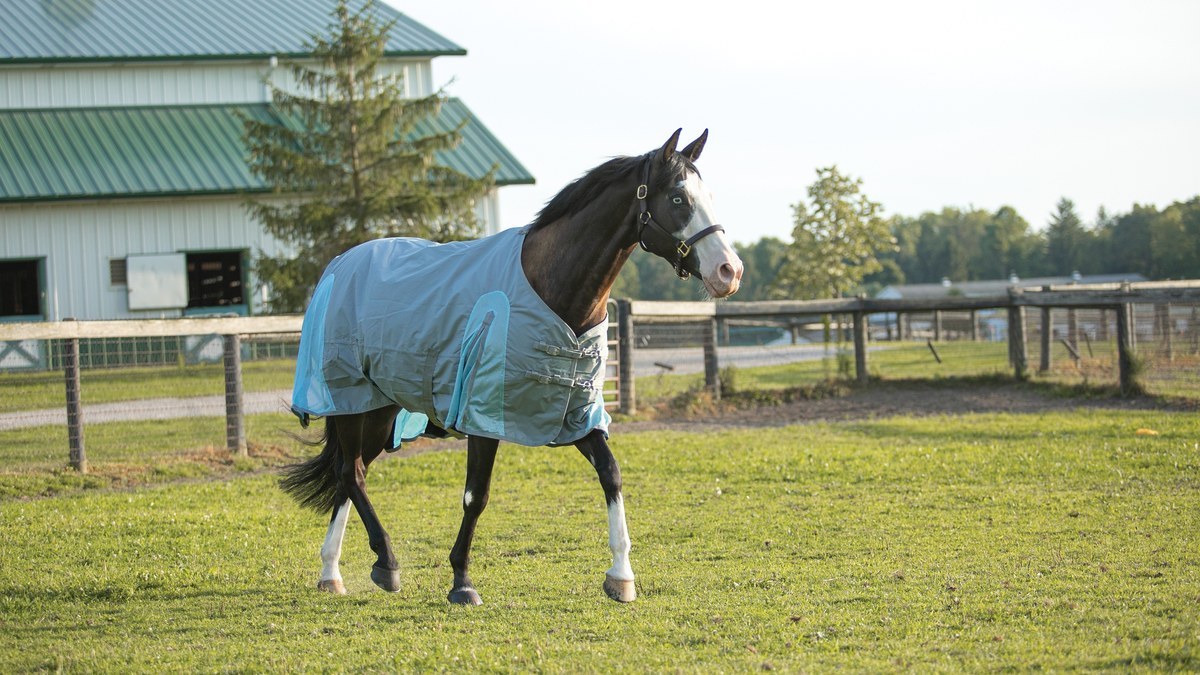
If my horse is already growing a winter coat, does blanketing work against it?
The practical consequence is commitment. A horse who's been blanketed all November has a flattened coat that insulates less than an unblanketed horse's, so pulling the blanket in December leaves him worse off than if you'd never started.
That's the real decision in September: not what to put on today, but whether you're blanketing this horse this winter.
What do I do on 45-degree mornings and 75-degree afternoons when I can't get back to swap?
This is the single most common fall mistake, and it's an easy one to make because you're at the barn at 6am when it's genuinely cold. Remember the horse has been outside all night generating heat and is likely fine.
If the swing is extreme and your horse genuinely needs something overnight, a turnout sheet is the safer choice than a lightweight -- it takes the edge off without trapping heat when the sun comes up.


Most horses need two, not six
A sheet and a midweight covers the majority of a northern winter. Add a heavyweight if your horse is clipped or lives out through January.
Turnout BlanketsTurnout & Rain SheetsSpecialty SizesNot sure where your horse lands? Tell us his coat, his turnout, and your winters, and we'll help you sort it out -- ask our team.